
 KSCRS
KSCRS
Search
- Page Path
- HOME > Search
Review Article
- Glaucoma evaluation and management in refractive surgery candidates: a review
- Yeoun Sook Chun
- Insights Cataract Refract Surg 2026;11(2):27-39. Published online June 18, 2026
- DOI: https://doi.org/10.63375/icrs.26.002
-
 Abstract
 PDF
PDF ePub
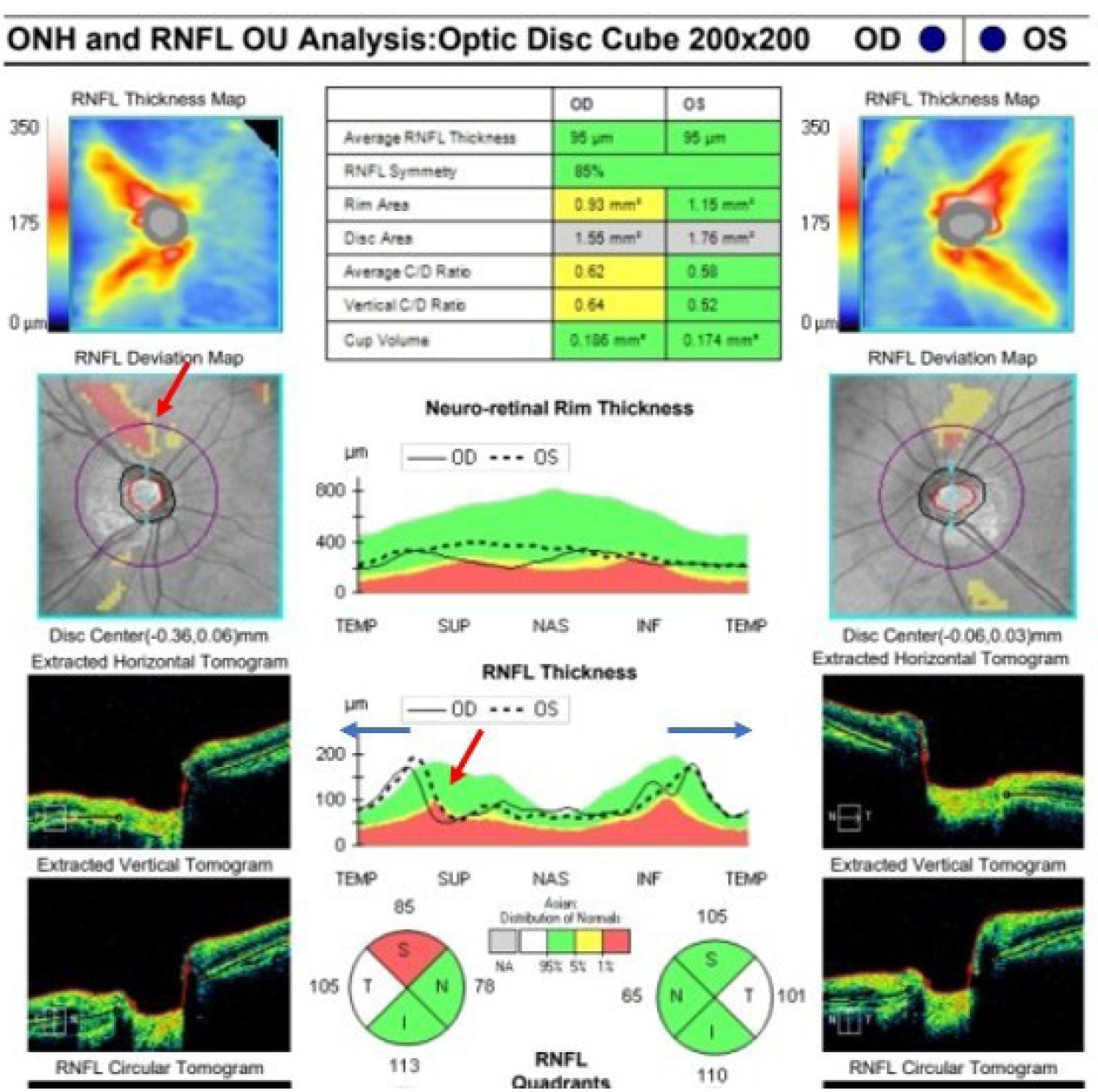
ePub - The global prevalence of refractive surgery for myopia has increased substantially; however, definitive guidance regarding its effects on glaucoma assessment and progression remains limited. Although advances in technology and diagnostic instruments have improved the detection and monitoring of glaucoma in patients undergoing refractive surgery, concerns persist regarding postoperative intraocular pressure (IOP) elevation and the inaccuracy of IOP measurements associated with reduced central corneal thickness. Myopia is a well-established risk factor for primary open-angle glaucoma, and this risk may be further increased by various intraoperative and postoperative factors related to refractive surgery. Therefore, thorough preoperative glaucoma screening, along with systematic postoperative follow-up and evaluation, is essential. This review delineates key considerations before refractive surgery and summarizes important clinical issues in eyes that have undergone refractive procedures. Furthermore, it outlines the pathogenesis, mechanisms, and management strategies for postoperative IOP elevation.
- 3,508 View
- 17 Download

Original Article
- Results of multifocal intraocular lens implantation in patients who underwent corneal refractive surgery
- Eun Chul Kim
- Insights Cataract Refract Surg 2025;10(3):76-82. Published online October 31, 2025
- DOI: https://doi.org/10.63375/icrs.25.011
-
Abstract
PDFePub
- Purpose
The aim of this study was to evaluate the clinical results of multifocal intraocular lenses in patients who underwent corneal refractive surgery.
Methods
Thirty eyes (16 patients; Synergy: ZFR00V) were retrospectively enrolled. Uncorrected and corrected near visual acuity (UNVA, CNVA), intermediate visual acuity (UIVA, CIVA), and distant visual acuity (UDVA, CDVA), manifest refraction spherical equivalent (MRSE), and satisfaction score were assessed before and after surgery.
Results
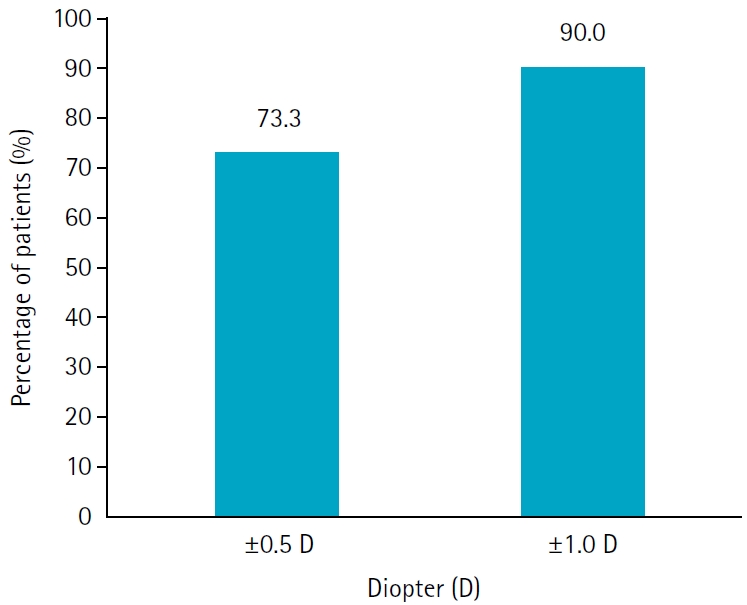
The postoperative UDVA, UIVA, UNVA, and MRSE of the three groups exhibited improvements compared to the preoperative data (P<0.05). The error between the postoperative refraction and the intraocular lens calculation was smaller with the Barrett True K formula than with the Haigis-L formula (P<0.05). The defocus curve at 0 diopter (D) increased, from –1 to –1.5 D, and from –2.5 to –4.0 D, indicating improved vision at distant, intermediate, and near distances. Distance satisfaction (1.47±0.63), near satisfaction (1.25±0.71), and overall satisfaction (1.36±0.42) were good, but light scattering and halo satisfaction (1.97±0.85) yielded a poor result.
Conclusion
In patients with cataracts who underwent corneal refractive surgery, multifocal intraocular lens implantation resulted in excellent uncorrected visual acuity at distant, intermediate, and near distances. However, careful consideration should be given to patient selection due to the incidence of side effects such as glare and halos.
- 1,274 View
- 18 Download
 First
First Prev
Prev


