
 KSCRS
KSCRS
Search
- Page Path
- HOME > Search
Original Article
- Effects of extract of Parthenocissus tricuspidata living on pine in a nonclinical model of dry eye disease
- Hyeyoon Goo, Chung-Hun Oh, Kyong Jin Cho
- Insights Cataract Refract Surg 2026;11(2):56-68. Published online June 30, 2026
- DOI: https://doi.org/10.63375/icrs.26.005
-
 Abstract
 PDF
PDF Supplementary Material
 ePub
ePub - Purpose
Dry eye disease (DED) is a multifactorial ocular surface disorder characterized by tear film instability, hyperosmolarity, and inflammation. Oxidative stress plays an important role in DED pathogenesis by exacerbating ocular surface damage. Parthenocissus tricuspidata growing on pine (PT) has been reported to have antioxidant and anti-inflammatory properties.
Methods
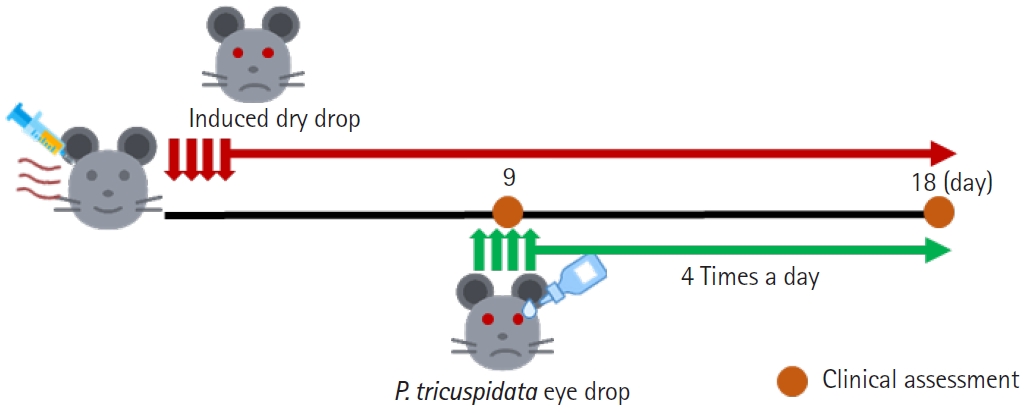
Oxidative stress was induced in human conjunctival epithelial cells (Wong-Kilbourne derivative of Chang conjunctival [WKD] cells) using H2O2, and the antioxidant and protective effects of PT were evaluated. The anti-inflammatory and therapeutic effects of PT were also investigated in a mouse model of DED.
Results
In WKD cells, PT treatment reduced H2O2-induced apoptosis, reactive oxygen species production, and phosphorylation of mitogen-activated protein kinase signaling proteins. Antioxidant enzyme activity, including superoxide dismutase and catalase, increased, whereas malondialdehyde and interleukin-6 levels decreased, indicating reduced oxidative stress and inflammation. In vivo, PT eye drops significantly improved clinical signs of DED, including tear volume and tear film break-up time. Histological analysis and cytokine assays showed reduced expression of pro-inflammatory markers in corneal and conjunctival tissues.
Conclusion
PT extract exerts therapeutic antioxidant and anti-inflammatory effects, highlighting its potential as a treatment for DED.
- 843 View
- 17 Download

 First
First Prev
Prev


